
Payroll operating model
Wagestream: Uses an intercept-style flow with an employee account layer in the process.
FlexEarn: Uses a deduction-style model designed to keep reconciliation simpler for employers.
Comparison Guide
Wagestream is the largest provider of earned wage access in the UK, but size is not everything. This page compares operating model, cost shape, and implementation friction so employers can decide with facts instead of hype.
Why buyers switch
FlexEarn is designed to be lighter to roll out and easier to manage over time. The core difference is reimbursement flow: FlexEarn keeps employer reconciliation straightforward instead of inserting a separate employee account structure into payroll.
At a glance
The right earned wage access provider is not only about employee-facing features. It is also about what payroll, HR, and finance teams need to manage after rollout.
Payroll operating model
Wagestream: Uses an intercept-style flow with an employee account layer in the process.
FlexEarn: Uses a deduction-style model designed to keep reconciliation simpler for employers.
Payroll process intrusion
Wagestream: Introduces a separate employee account model into the pay journey, which can make payroll teams more cautious about setup, employee changes, and operational ownership.
FlexEarn: Fits more naturally into existing payroll routines because payroll teams can process a deduction file using a workflow they already handle regularly.
Rollout friction
Wagestream: Can involve more explanation around employee setup and how salary flow works.
FlexEarn: Designed for quicker onboarding and a more straightforward explanation for employers and employees.
Employer admin
Wagestream: Operational complexity depends on how the program is configured and communicated.
FlexEarn: Built to reduce moving parts and ongoing payroll administration.
Comparison Table
The strongest competitor pages help buyers evaluate the operating model, not just the branding. This comparison focuses on the practical questions payroll, HR, and finance teams usually need to answer before rollout.
| Area | Wagestream | FlexEarn |
|---|---|---|
| Reimbursement model | Uses an intercept-style flow with an employee account layer in the salary journey. | Uses a deduction-style model built to keep employer reconciliation straightforward. |
| Payroll team involvement | Requires buyers to understand how the account flow affects employee communication, bank detail handling, and pay-day operations. | Designed to reduce moving parts for payroll and finance teams after rollout. |
| Employee bank details in payroll | Adds a separate account layer into the salary journey, which can create more operational questions during onboarding, payroll changes, and employee support. | Keeps the employer's normal payroll payment flow intact and handles early access through deductions rather than rerouting salary. |
| Implementation shape | Implementation complexity depends on the employer setup, communications model, and connected systems. | Positioned around a lighter operational model with a practical integration path. |
| Employer evaluation focus | Often assessed around employee experience, account setup, and process design. | Often assessed around simpler rollout, operational clarity, and lower admin overhead. |
| Best fit | May suit employers comfortable with an account-led operating model. | May suit employers prioritizing operational simplicity and payroll-friendly rollout. |
Fast Scan
Operating Model
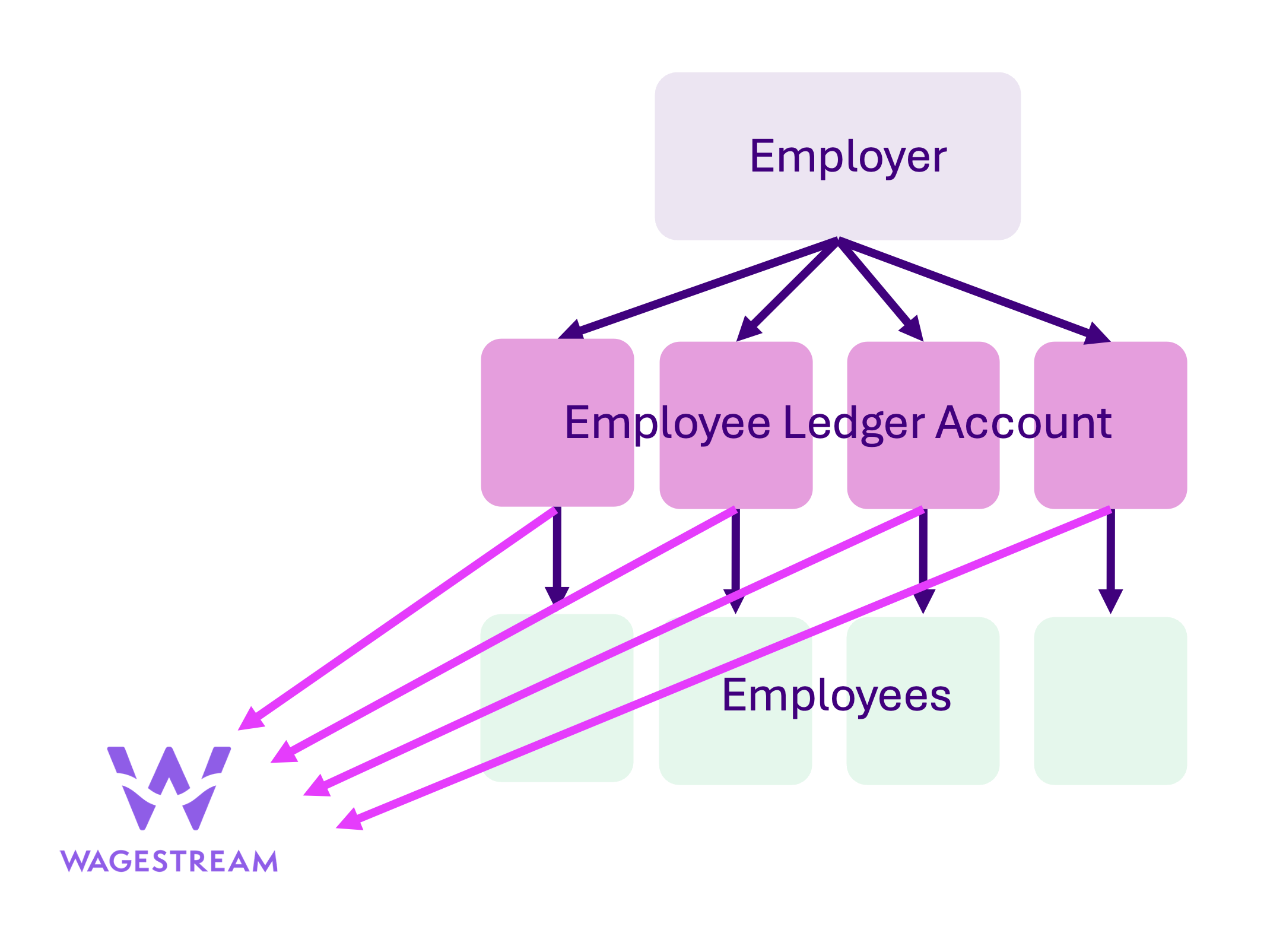
From an employee's perspective, Wagestream's earned wage access service can appear similar to FlexEarn.
The operational difference is how Wagestream gets reimbursed. They set up a new e-money account for each employee, reroute salary into that account, then take reimbursements and fees before the remainder reaches the employee's bank account.
This is commonly described as the intercept model.
Operating Model
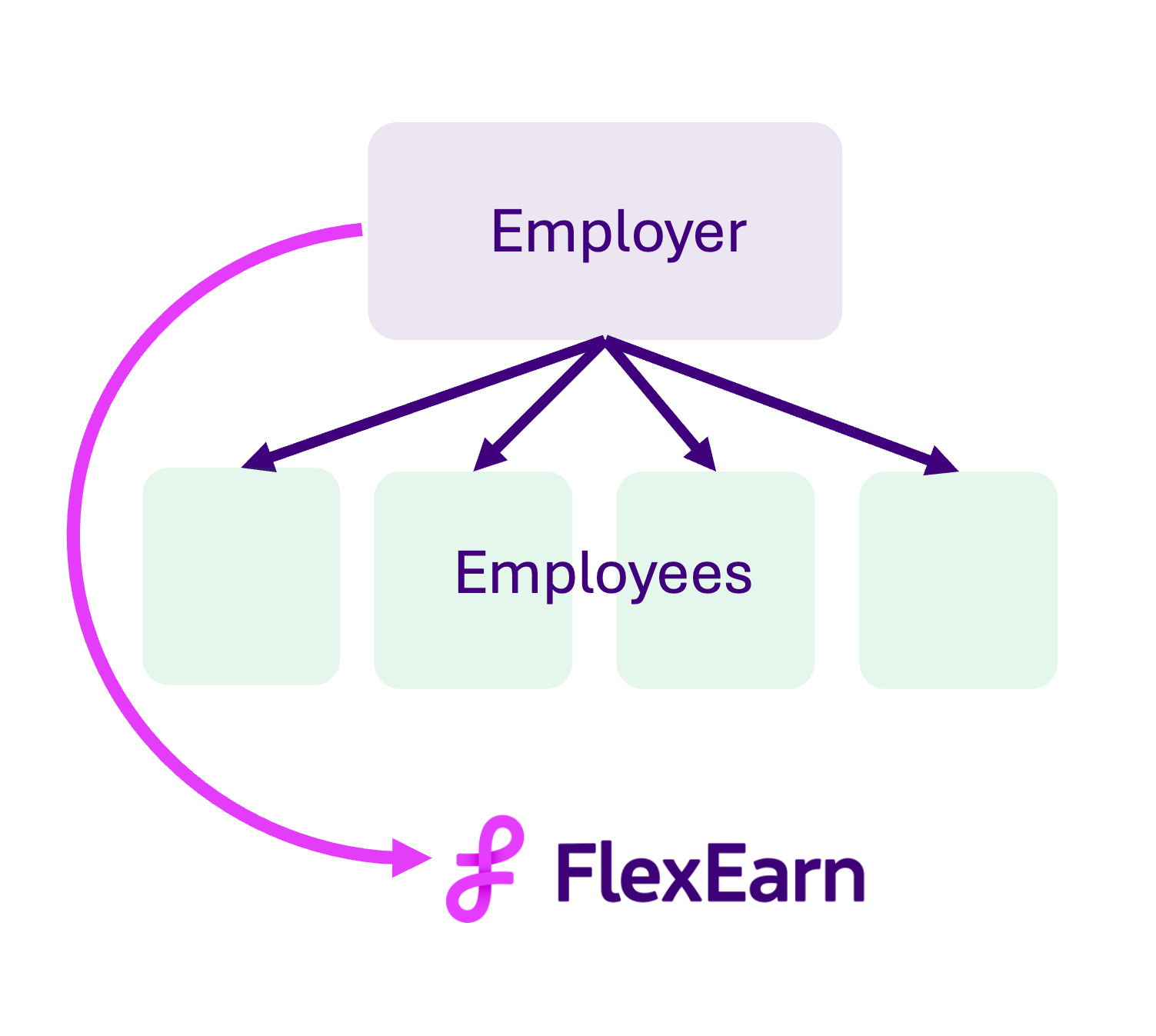
FlexEarn operates a simpler model that reduces onboarding friction, operational overhead, and ongoing maintenance.
Employees can still withdraw a portion of salary in advance, but reimbursements are handled through a single payment from the employer to FlexEarn once per pay period.
That means there is no need to intercept salaries because withdrawals are simply deducted from wages. This is the deduction model.
Payroll Risk
One of the biggest objections in an earned wage access evaluation is not the app. It is whether the provider becomes embedded in the employer's core payroll process in a way that creates more operational dependency than the team is comfortable with.
What creates concern
Buyers often become more cautious when a provider's model depends on inserting a separate employee account layer into the salary journey. That can raise extra questions around onboarding, bank detail setup, payroll exceptions, employee changes, and who owns problems when something needs correcting.
Why FlexEarn feels lighter
FlexEarn is easier for many payroll teams to assess because it follows a deduction-led route. Payroll teams already work with deduction files as part of normal payroll operations, so the model is often easier to explain internally and easier to absorb into existing processes.
Buying Guidance
The right choice depends less on headline features and more on how the operating model fits your payroll setup, your systems, and the amount of change your team wants to manage.
Choose a simpler operating model
If your payroll, HR, and finance teams want earned wage access without introducing unnecessary process overhead, FlexEarn is designed around that lower-friction operating model.
Evaluate beyond the app demo
A good comparison should cover implementation, payroll reconciliation, employee communications, and integration work, not just the employee-facing app.
Map the rollout against your existing stack
If you rely on time and attendance, HR, or payroll tools, the real buying question is how quickly a provider can fit your current setup with minimal operational disruption.
Protect the payroll process
Many employers are comfortable with deduction workflows because payroll teams already run them every pay cycle. A model that asks payroll to accommodate a new account structure can trigger more scrutiny, more exceptions, and more stakeholder concern.
Continue Evaluating
If this comparison is part of a broader evaluation, these pages will help you check fit, implementation path, and related buying criteria.
Product overview
See how FlexEarn is positioned for employers evaluating rollout, controls, and employee experience.
Integrations hub
Review the systems FlexEarn connects to and the implementation routes available to your team.
Earned wage access for employers
Use the broader employer guide if you are still shaping requirements before comparing providers.
FAQ
FlexEarn is designed for employers that want earned wage access with a simpler rollout and a more straightforward payroll operating model.
The main difference highlighted here is reimbursement flow. FlexEarn uses a deduction-style approach intended to reduce administrative friction for employers.
Ask how reimbursements work, what payroll and finance teams need to manage after launch, how employee communications are handled, and which integrations are available for your environment. It is also worth asking how much the provider needs to sit inside the payroll payment flow itself, because that often determines how comfortable payroll teams feel with the rollout.
Employers should also compare reconciliation effort, employee setup, fee transparency, implementation time, and the day-to-day admin model for payroll teams. If you want the broader category context, the earned wage access guide is the best next read.
Next Step
If you want an earned wage access rollout with simpler reimbursement mechanics and less ongoing administration, we can walk through the model and integration path with your team.