
Retention pressure in frontline care teams
Social care employers often compete for staff in a market where financial pressure can influence whether people stay, leave, or look for additional work elsewhere.
Industry Page
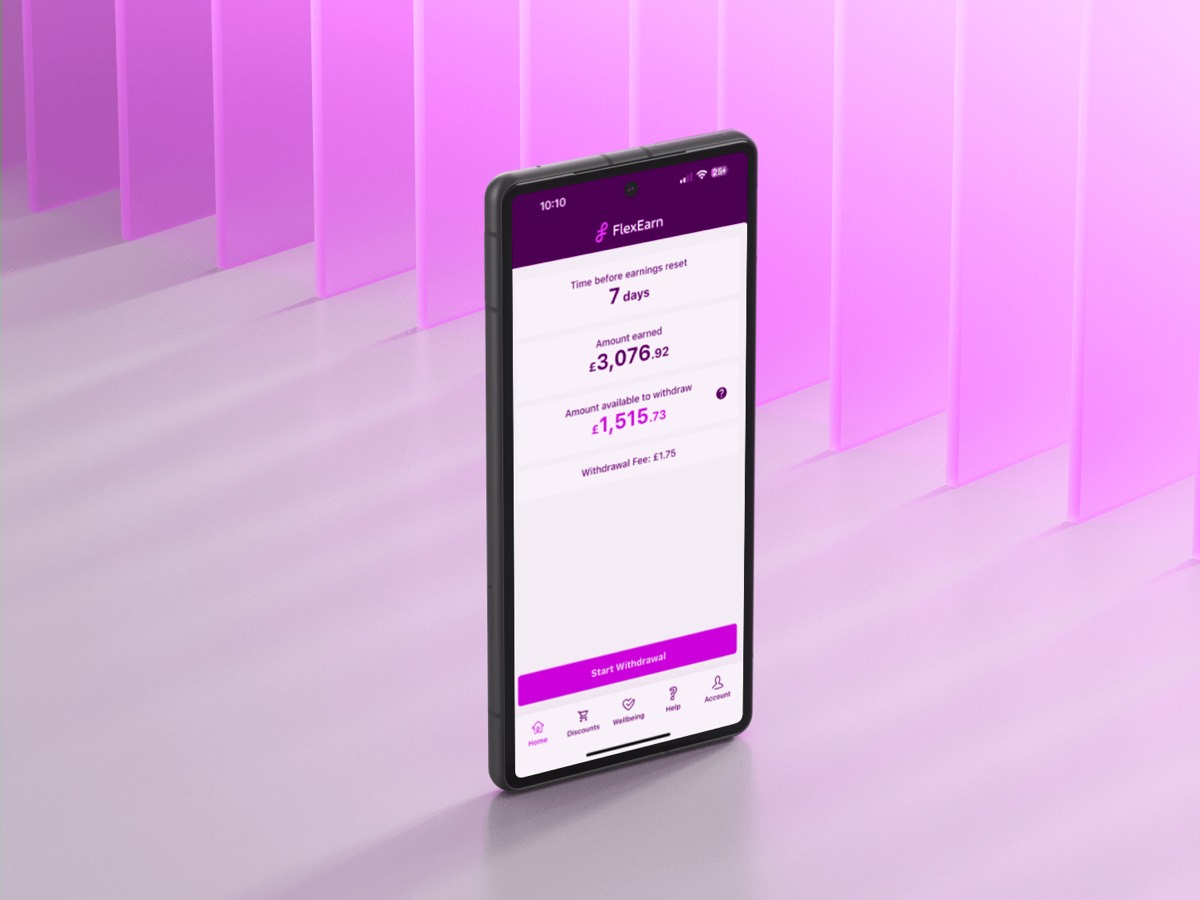
FlexEarn helps social care providers offer earned wage access and on-demand pay in a way that fits shift-based operations, payroll deadlines, and day-to-day staffing pressure. That can support care staff financial wellbeing while giving employers a clearer, more manageable operating model.
Overview
Social care employers often manage hourly or shift-based teams where cash-flow pressure can affect attendance, overtime uptake, and longer-term retention. In that environment, earned wage access can become more than a perk. It can be a practical financial wellbeing benefit that helps care staff feel more in control between paydays.
If you are researching the broader category first, start with our earned wage access page or the on-demand pay page. This page focuses on how the same category applies specifically to social care providers.
Care Challenges
Social care searches tend to be tied to practical workforce outcomes rather than abstract product research. Employers want solutions that fit recruitment, retention, coverage, and payroll reality.
Social care employers often compete for staff in a market where financial pressure can influence whether people stay, leave, or look for additional work elsewhere.
When rotas are hard to cover, providers can end up relying on agency labour or repeated last-minute interventions from managers and coordinators.
Many care providers already handle requests for early pay, exceptions, or one-off support. A structured earned wage access model can reduce that friction.
Employer Benefits
For care providers, the value of earned wage access usually sits at the intersection of employee wellbeing and operational stability.
Giving care staff more flexibility over timing of earned pay can make the wider benefits offer feel more practical and relevant.
Unexpected costs do not wait for payday. On-demand access to earned wages can help reduce short-term stress between pay cycles.
A good rollout gives employers visibility, limits, and a repeatable operating model instead of ad hoc manual exceptions.
When employees know earnings are visible and accessible in a structured way, picking up additional work can feel more manageable.
Social care teams need benefits that work in the real world of shift patterns, rota changes, and payroll deadlines. FlexEarn is designed to sit alongside existing payroll cycles while giving employees controlled access to part of the wages they have already earned.
That matters for providers who want to improve financial wellbeing without creating extra manual work for payroll, HR, or operations teams.
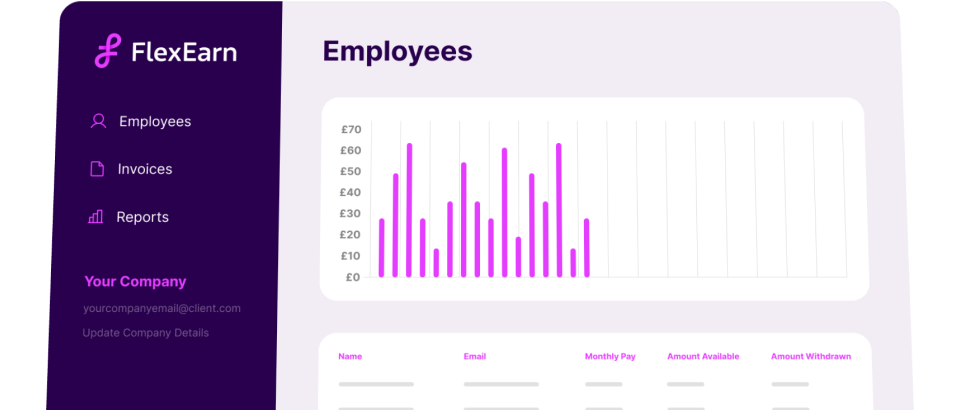
Whether you operate home care, supported living, residential care, or a mix of service models, the operational question is the same: can the benefit fit cleanly around your workforce data and payroll process?
That is why employers in care often compare providers on implementation effort, integration options, employee communication, and the day-to-day admin model.

Integrations
One of the most important buying questions for care providers is how the benefit fits with existing payroll, rota, and care-management workflows.
For providers that need care-workforce data to move cleanly into payroll-linked earnings workflows.
For care organisations looking for dependable data movement from rostering and attendance systems.
Useful for care teams managing shift scheduling and approved hours across multiple locations.
A practical route for providers using rota-led workflows and looking for cleaner payroll-connected data.
You can also browse the full integrations hub if your care tech stack is broader or more bespoke.
Provider Checklist
Two providers may both offer earned wage access, but the difference in payroll effort, employer control, and day-to-day usability can be significant.

Core topic
Read the main provider-focused page covering rollout, payroll controls, and what to compare in a provider.
Search term
See how the more conversational search term maps to earned wage access buying journeys.
Systems
Explore integration pages for payroll, rota, and workforce systems relevant to care providers.
FAQ
Most providers evaluate it to support staff financial wellbeing, reduce payroll friction around urgent pay requests, and strengthen recruitment and retention in shift-based teams.
Yes. It is especially relevant where work is shift-based, employees face short-term cash-flow strain, and employers want a practical wellbeing benefit that does not require a full payroll redesign.
Compare payroll fit, implementation effort, employer controls, fee transparency, employee communication, and integration options for your rota, payroll, or care systems.
No. FlexEarn also supports a broader financial wellbeing proposition, which can make the benefit more useful and easier to position over time.
Next Step
We can walk through payroll fit, care-software integrations, employer controls, and how earned wage access would work in practice for your teams.